|
Self-Discovery Portal
Maximum Systems of Enlightenment
"What do you really want out of life?"
 A group of friends who had gathered for a weekend retreat considered this question, and everyone in turn communicated their thoughts and feelings about it. One person itemized the following list:
- An end to fear.
- No unanswered questions.
- Everlasting bliss.
When we got around the table to one of our friends who we knew had experienced a profound realization in the preceding months, he said, citing the above objectives, "I couldn't have stated any better what it was I found."
The term enlightenment has widely varied connotations and is thus used sparingly, if at all, by people who've had profound awakenings. Many prefer terms such as self-realization, awakening, recognition or self-definition. Just as the paths leading up to that radical change of view concerning our essential nature reflect the differences of the travelers' outer natures, their recommendations for others cover a range of possibilities. So the question arises for any searcher not already addicted or committed to a particular path whether there is a maximum system of self-definition that will lead to enlightenment.

 Maximum systems: PSI group
Maximum systems: TAT teachers
|
Directory:
Threefold Path |
Energy Transmutation, Transmission & Between-ness |
Reversing the Vector |
Surrender to a Higher Power |
More on Between-ness |
What Should I Do? |
The Individual Essence
*
The four pillars of Zen:
1. A special transmission outside of the scriptures.
2. No dependence upon words or letters.
3. Direct pointing at the soul of man.
4. Seeing into one's own nature and the attainment of Buddhahood.
*
From the Tao te Ching (verse 20):
The master said, "It's not a question of understanding or not understanding.
Understanding is a delusion; not understanding is indifference...."
*
"The Three Books of the Absolute" can be found in the back of The Albigen Papers by Richard Rose and is also included in Profound Writings, East & West, both published by the TAT Foundation.
*
Richard Rose was my teacher and friend for twenty years, so I'm personally familiar with him and his teaching. I find several things that are unique in his system, which may have been taught personally by other teachers but don't come through in the writings by or about them. Three of these items are: the Threefold Path structure that he recommended to anyone not enamored of another approach; his teaching on energy transmutation, between-ness and transmission; and the establishment of a reverse vector.
*
The Threefold Path paper by Richard Rose is available on the PSI Articles page.
*
I come to you as a man selling air,
And you will think twice at the offer and price,
And you will argue that nothing is there,
Although we know that it is - everywhere.
I bring a formula largely untold, -
Of forces mixed with between and betwixt.
And only seen when allowed to unfold.
And better felt when the body is cold.
I have a map to the home of the soul,
Beyond the mind is a golden find, -
The paradox is a guide to the goal, -
Though doubt is sacred, each man is the Whole.
(This poem appears in the back of Profound Writings, East & West, compiled by Rose from sources he thought pointed the way and were not widely known or available).
*
You learn sooner or later that you are not running the show and that if you relax, the show runs better. Things will happen if you just relax; many things are under control in many respects. You quit and things happen, you let the door open, you stop the obstruction, you eliminate the ego. The ego is one of the biggest obstructions to the achievement of anything. (Richard Rose, Carillon)
*
So a willingness to accept everything about oneself, the good, the bad and the ugly is a way of doing an "end-run" around the ego self which could break the identification with the body-mind-persona. But it's as though the two occur simultaneously. You can't see clearly so long as you would reject that which you might see. As soon as you come to a point of willing acceptance you see clearly.
Getting to this point of acceptance involves surrender. You can't decide to surrender, but you can get to this point by counter-balancing the intellectual side of self-inquiry with what the Hindus refer to as Bhakti. A heartfelt remembrance that a higher power, albeit unknown, is running the show opens one to the "grace of God." As Rumi says, "Whoever brought me here will have to take me home."
(Self-realized Richard Rose student Bob Cergol, unpublished correspondence)
*
"The Hound of Heaven" by Francis Thompson is included in Profound Writings, East & West.
*
Questioner: So many saints say that when you are ripe and ready, you will realize. Their words may be true, but they are of little use. There must be a way out, independent of ripening which needs time, of sadhana [spiritual practice] which needs effort.
Maharaj: Don't call it a way; it is more a kind of skill. It is not even that. Stay open and quiet, that is all. What you seek is so near you that there is no place for a way.
(Talks with Sri Nisargadatta, dialogue 43.)
*
Wrote this general things for the seeker to do list some weeks ago. I see it as a summation (leaving out the days when I couldn't get out of bed because of depression!) of my path. Thought you might find this interesting (Self-realized Richard Rose student Shawn Nevins,
unpublished correspondence; see the later expanded form in the PSI Articles section):
1. Fall and rise a thousand times if need be.
2. Give up, then try again.
3. Become a habitual seeker.
4. Realize that you want to help others.
5. Be thankful.
6. Become a decent human animal.
7. Look into the source of thoughts.
8. Look in whatever way keeps your attention.
9. Will to do one thing – one iron in the fire.
10. Find a teacher(s).
11. Always desire more, never be content.
12. Surround yourself with fellow seekers.
13. Spend time alone.
14. Know that the Hound of Heaven is Real.
*
Our original Buddha-nature is, in highest truth, devoid of any atom of objectivity. It is void, omnipresent, silent, pure; it is glorious and mysterious peaceful joy – and that is all. Enter into it by awaking to it yourself. This which is before you is it, in all its fullness, utterly complete. There is naught else beside. (The Zen Teaching of Huang Po)
*
I think that the study of states of mind is far more important than the focusing of attention on accidental reactions or behavior patterns. Such a study can come about only by direct experience, and the faculty for having direct experience can come about by particular systems of developing sensitivity or by a change in the being or nature of the observer that will facilitate his rapport with another mind. (Richard Rose, The Albigen Papers)
*
Questioner: There are many who strive for self-knowledge earnestly, but with scant success. What may be the cause of it?
Maharaj: They have not investigated the sources of knowledge sufficiently; their sensations, feelings and thoughts they do not know well enough. This may be one cause of delay. The other: some desires may still be alive.
(Nisargadatta, dialogue 43.)
*
He came to us as a man selling air
And we all thought twice at the offer and price
Of this thing which seemed so rare.
Was he dreaming, or really There?
Of his formula I only know
Bits and pieces of what he told:
Live the Truth, be not shy, unlock your heart,
Fear not to die, help your friend along the Way,
From untruth back away.
His map is there, the last mile up to you.
Die to live – the paradox is true.
Full of anguish over here, full of joy over there,
You were never, never anywhere.
(Shawn Nevins, on Richard Rose)
*
If I were 'unawakened' and had the offer [of help] from some person claiming awakening, I would be careful not to lose him completely, because if I was wrong [i.e., in my doubts] I would have thrown away all that life has to offer.... (Alfred Pulyan, correspondence)
|
Is there a common denominator among the "maximum systems" such as the teachings of Ramana Maharshi (likened to the Advaita Vedanta of Shankara), the Albigen System of Richard Rose, Taoism and Zen? I believe there is, and it is that they are non-system systems and non-teaching teachings. They offer no formulas for the seeker but describe a way of "holding one's head" and of making one's life a living laboratory.
These systems aimed at maximum realization are based on a self-realized individual pointing the way, and "the way" has to be read between the written lines and heard between the spoken words. As the American Zen master Alfred Pulyan wrote, if the truth could be put into words, then it would be published in the newspapers. These teachings are well-represented by the four pillars of Zen attributed to Bodhidharma circa 600 AD (see left column).
Words, according to Ramana Maharshi, act as a resistance to the flow of truth, as a light fixture in an electrical circuit acts as a resistor. The glowing light may alert us to the presence of its mysterious source, but it takes an actual contact with the current to shock us into true
awareness. And awareness of It, these teachers tell us, reveals our true nature and being.
The originators of these maximum systems testified to awakening to their true nature and having found it to be an absolute state of being. The transition into this awareness and a communication of it were transmitted with much beauty and force in "The Three Books of the Absolute," which came to Richard Rose in one sitting shortly after his awakening in 1947.
Another common thread running through these non-system systems is the paradoxical nature of the truth when we try to grasp it with the mind. Our body-minds are immersed in a dualistic
dimension where everything is ultimately defined in terms of what it isn't, and where the opposite of any philosophical assertion can be seen to be equally as valid. This condition was well-expressed by Abu Yazid, a Persian Sufi, who said: "This thing we tell of can never
be found by seeking, but only seekers find it."
The Threefold Path
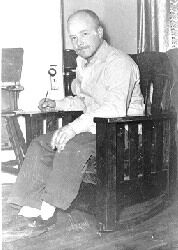 Rose studied in a Catholic pre-seminary in his teens and became highly disappointed with his inherited religion. But after his self-realization at age thirty, he was able to find esoteric wisdom in the Bible. An example of this was the statement attributed to Jesus: "I am the way, the truth and the life." Rose realized that this simple sentence described a broad approach to the spiritual search that could also be used as a self-checking device, and that it had been expressed similarly in the threefold aspect of Buddhism, namely taking refuge in the Buddha, the Dharma and the Sangha.
The directive of the threefold path is to be aware of the three aspects simultaneously: establishing a practice other than just reading or writing or talking about the search (the Way, Dharma); recognizing that chances of accomplishment are much greater if one finds one's
fellow-seekers to work with (the Life, Sangha); and living an increasing truthful life (the Truth; Buddha). Rose circulated a three-page paper among his students that spelled out his recommendations on the threefold path in some detail.
Energy Transmutation, Between-ness & Transmission
This is the title of one of Richard Rose's books, and it contains information that I've never found elsewhere. He wrote that an intentional search for truth, or self-definition, requires the creation of a large quantum of neural energy, which comes about by conserving glandular energy and transmuting it through mental effort. His advice is very practical and at the same time subtle, because his directive is one of "becoming" rather than learning. The finite mind may never grasp the infinite, but there is a way for the finite mind to become less finite. Such becoming relies on an adroitness that cannot be taught but is hinted at in his poem, "I come to you as a man selling air...."
Reversing the Vector
If we're searching for truth about the self and its relation to the cosmos, if we're seeking to lead a life that finds for us an explanation for our life, it's not the same as plotting a course to London or even Tanganyika. We don't know what the truth is or where to find it, and when we realize that it's not something that can be put into books or (worse yet) grasped by the mind, we have to find a more dexterous approach. The one that appeals to philosophical common sense is that of backing away from untruth. We sharpen the sword of discernment by retreating from the less true in favor of the more true. We make ourselves into a very determined vector – force in a given direction – and reverse the vector from its natural direction of focus on the external world. We observe everything in our range of vision, realizing that the self is never that which is seen. As we become less identified with what we once thought of as ourselves (our body, our feelings, our thoughts, etc.) the line between outside and inside shifts. Rose calls this process "climbing Jacob's Ladder," which he describes in The Psychology of the Observer. This is the basic process that everyone goes through who comes to a realization of his true essence, he wrote.
I'd like to leave you with a few quotes from various sources that I think illustrate the common theme running through the maximum systems.
On Surrender to a Higher Power
Fortunately, even though life may get rough, "all will be well, very well." I cannot logically prove this, but it is a fact (if you will let your friend make a mere assertion of what is true by his own experience) and it is a fact according to a lot of others too, that there is a Something that seeks us individually & personally with a humility & open simplicity we often lack. The poem "The Hound of Heaven" by Francis Thompson illustrates this.... (Alfred Pulyan, American Zen master, from unpublished correspondence)
Do things for the sake of a higher power, and it will correctly guide your every step. There is a god within every man... that finds his contact with the Chief Engineer of this scenario... the Absolute God that has everything planned or is able to at least enable us to see that everything is for the best. And the best includes eternal contentment at the cost of momentary inconvenience. (Richard Rose, unpublished correspondence, courtesy of an appreciative friend)
More on Between-ness
Suppose truth is a rabbit. This rabbit is in a field – a large field. Round the field are very high walls – creeds & dogma! So – find your damn rabbit!! And remember the rabbit knows your thoughts & so as you resolve to go one way to catch it, it knows & evades you! (Alfred Pulyan, correspondence)
In the light of consciousness all sorts of things happen and one need not give special importance to any. The sight of a flower is as marvelous as the vision of God. Let them be. Why remember them and then make memory into a problem? Be bland about them; do not divide them into high and low, inner and outer, lasting and transient. Go beyond, go back to the source, go to the self that is the same whatever happens. Your weakness is due to your
conviction that you were born into the world. In reality the world is ever recreated in you and by you. See everything as emanating from the light which is the source of your own being. (Nisargadatta, dialogue 43.)
Consciousness, descending from above the field of subject-object knowledge, is distorted just as soon as it is forced into the relative form of expression. In the latter field, discursive formulation has finished its task when it has finally shown what non-relative Knowledge is not. It clears the ground so that no obstruction remains for entering the Darkness and Silence. But when the 'Voice of Silence' speaks into the relative world, the meaning lies between the words, as it were, rather than in the direct content of the words themselves.... We may say that the sequence of words is like the obverse side of an embroidered design. One must turn to the other side of the cloth to see the real figure.... (Franklin Merrell-Wolff, from Experience and Philosophy)
Whenever a question is put to you, answer it in the negative if it is an affirmative one, and vice versa. (Hui-neng's deathbed instructions to his disciples, from The Sutra of Hui-neng)
What Should I Do?
Part of the system I advise in The Albigen Papers is that we make milk from thorns. These very things which are negatives can be turned, the energy taken from them, and this energy can be used in progression – in finding goals faster. (Richard Rose, Boston College Lecture, in The Direct-Mind Experience)
Be like the Tao.
It can't be approached or withdrawn from,
benefited or harmed,
honored or brought into disgrace.
It gives itself up continuously.
That is why it endures.
(From the Tao te Ching, verse 56)
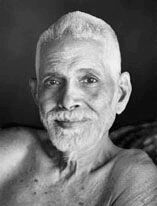 The solution to your problem is to see who has it.
(Talks with Sri Ramana Maharshi)
In the pursuit of knowledge,
every day something is added.
In the practice of the Tao,
every day something is dropped.
(From the Tao te Ching, verse 48)
God cares absolutely nothing for your imperfections or your perfection. (Shawn Nevins, correspondence)
Strict practices may encourage the creation of more ideas about what the awakened state looks like as the mind attempts to figure out or approximate it. But how can the mind approximate what it cannot grasp? The vastness is unimaginable. Although it is always
present, the mind cannot recognize it because the infinite is not perceived through the mind. The infinite perceives itself. (Suzanne Segal, Collision with the Infinite)
All thinking is an effort to avoid facing what is. (J. Krishnamurti, First & Last Freedom)
Questioner: All my life I was striving and achieved so little. I was reading, I was listening – all in vain.
Maharaj: Listening and reading became a habit with you.
Q: I gave it up too. I do not read nowadays.
M: What you gave up is of no importance now. What have you not given up? Find that out and give that up. Sadhana [spiritual practice] is a search for what to give up. Empty yourself completely....
Q: I am tired of all the ways and means and skills and tricks, of all these mental acrobatics. Is there a way to perceive reality directly and immediately?
M: Stop making use of your mind and see what happens. Do this one thing thoroughly. That is all.
(Nisargadatta, dialogue 43.)
The Individual
Essence
The Self is here and now, alone. (Talks with Sri Ramana Maharshi)
I used to be fascinated as a child by the behavior of a glob of mercury – splitting into tiny droplets and then watching those separate pieces "rush into each other" when in close proximity. The essence of individuals is like so many scattered bits of mercury that are drawn to each other as a manifestation in this dimension of the "desire to be re-absorbed" into the One-ness from which they've all split. We cannot get close enough to each other. And a lifetime of accidental patterns "conspires" to block our "re-joining".... The proximity of death is like an enzyme that thins the boundaries. In this condition individuals rush together to embrace each other, to embrace that which unites us all. (Bob Cergol, correspondence)
Huang Po was right on
And John Davis, too.
Richard Rose became the All,
Merrell-Wolff left many a clue.
Harding sees through his head and to the other side.
Bernadette turns within and naught does she find.
Maharshi speaks, but would much rather not,
Silence is closer than talk.
All have been to the place you have not,
Where you leave your self behind.
Get there by hunger, get there by pain,
Strive your whole life through.
Look at the looker, then he might crack,
To reveal the God that is True.
(Shawn Nevins, unpublished. John Davis: see his fascinating life story in Vol. 14 of the TAT Journal; Franklin Merrell-Wolff, Douglas Harding and Bernadette Roberts: see the Spiritual Search website on the Links page)
To meditate means to realize inwardly the imperturbability of the Essence of Mind. (The Sutra of Hui-neng)
The person who's always trying to go within and have this experience is the experience that the impersonal Awareness is having. (Bob Cergol, correspondence)
Quoting
The chief feature of the Quoter is his manifest cowardice and inability to outline
in his own words that which he believes. (Ouch! Richard Rose, The Albigen Papers)
|
If I have a system, it is simply a system by which Truth is reached by the continual analysis (not breakage) of various transcendental poses, and by a constant vigil over the many factors within the self. I make this statement because it worked for me, and in my lifetime. The system is not new, nor is it mine alone. I only hope to clarify things a bit.
If the Truth is within us, and we do not see it, it can only be that we see through the glass darkly – at this stage of the game.
~ Richard Rose (The Albigen Papers, "Discernment")
|
 Interested in finding and evaluating spiritual teachers and systems? Check out the Spiritual Teachers web site.
|
|